
Q&A: Recreational drug use versus poisoning
Q: What are the key differences between recreational drug use and poisonings?
A: Recreational drug use is voluntary consumption. The goal is mind-altering effects, whatever that might be, while poisoning is the harmful and involuntary exposure to a toxic substance. An overdose during recreational use is a form of poisoning, but not all poisonings are recreational. The key is documentation.
As a reminder, ICD-10-CM F-codes indicate that there is a true drug issue that has been diagnosed. The definitions clearly states that the patient is using some substance and that it’s abuse or dependence. ICD-10-CM T-codes define if it’s a poisoning, an overdose, an adverse effect, or an underdose. Documentation is key, and you need that in order to understand if this something that the patient is using recreationally but lead to a poisoning.
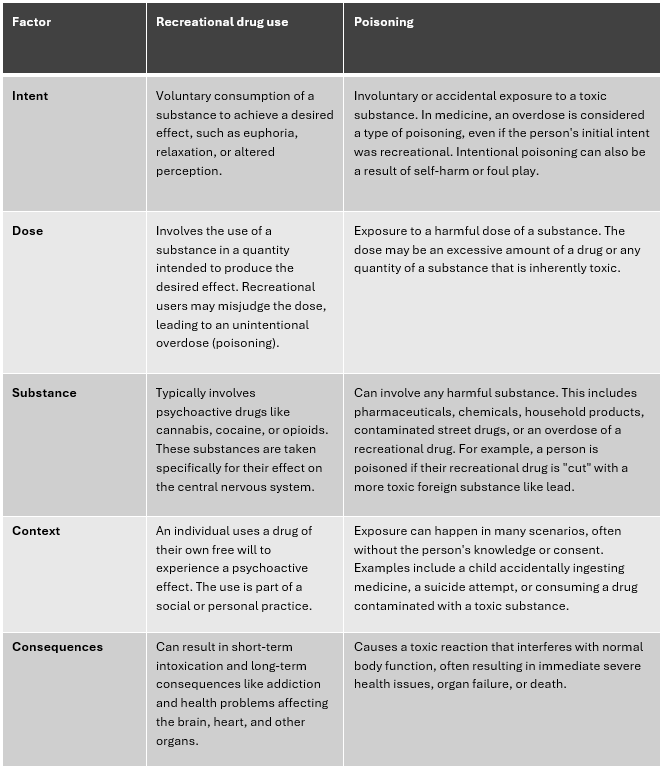
The table below is a reference that you can go back and look at that helps you understand with your documentation whether it is recreational drug use or poisoning. What is the intent? What is the dose? What is the substance that is involved? What is the context? What are the consequences?
Editor’s note: This information was published by JustCoding, which excerpted it from the HCPro webinar, “Beyond the Bottle: ICD-10-CM Coding Poisoning, Adverse Effects, and Underdosing with Accuracy and Clarity,” presented by Leigh Poland, RHIA, CCS, CDIP, CIC, vice president of coding services at AGS Health.